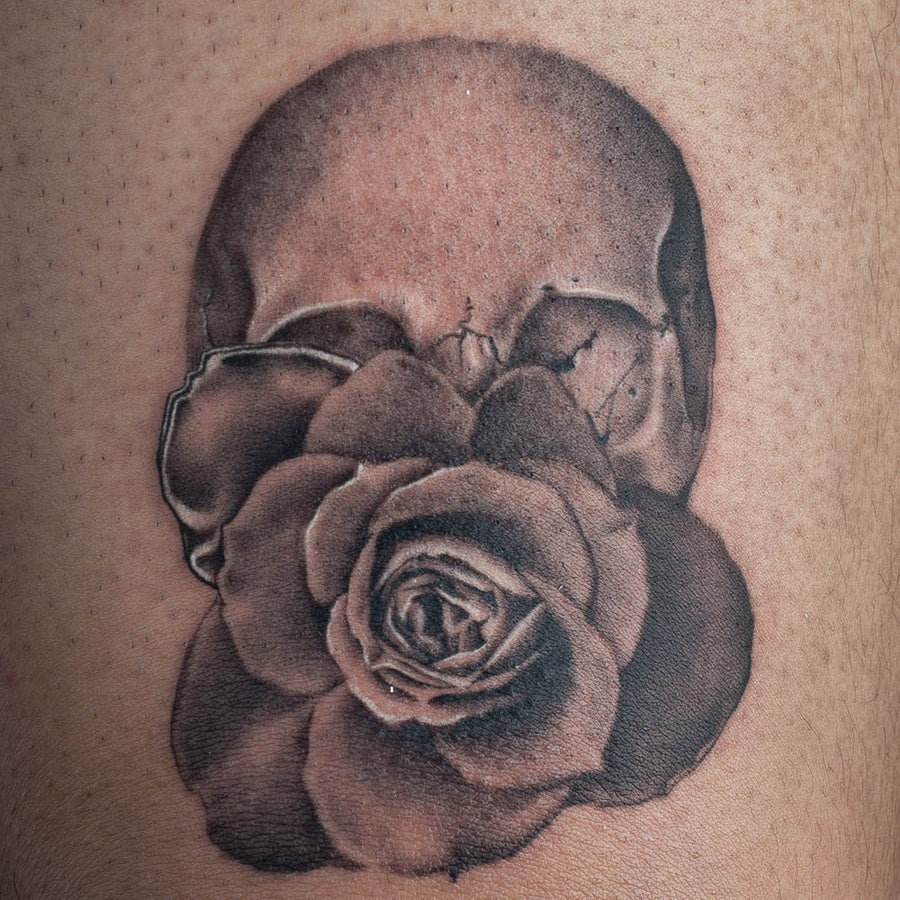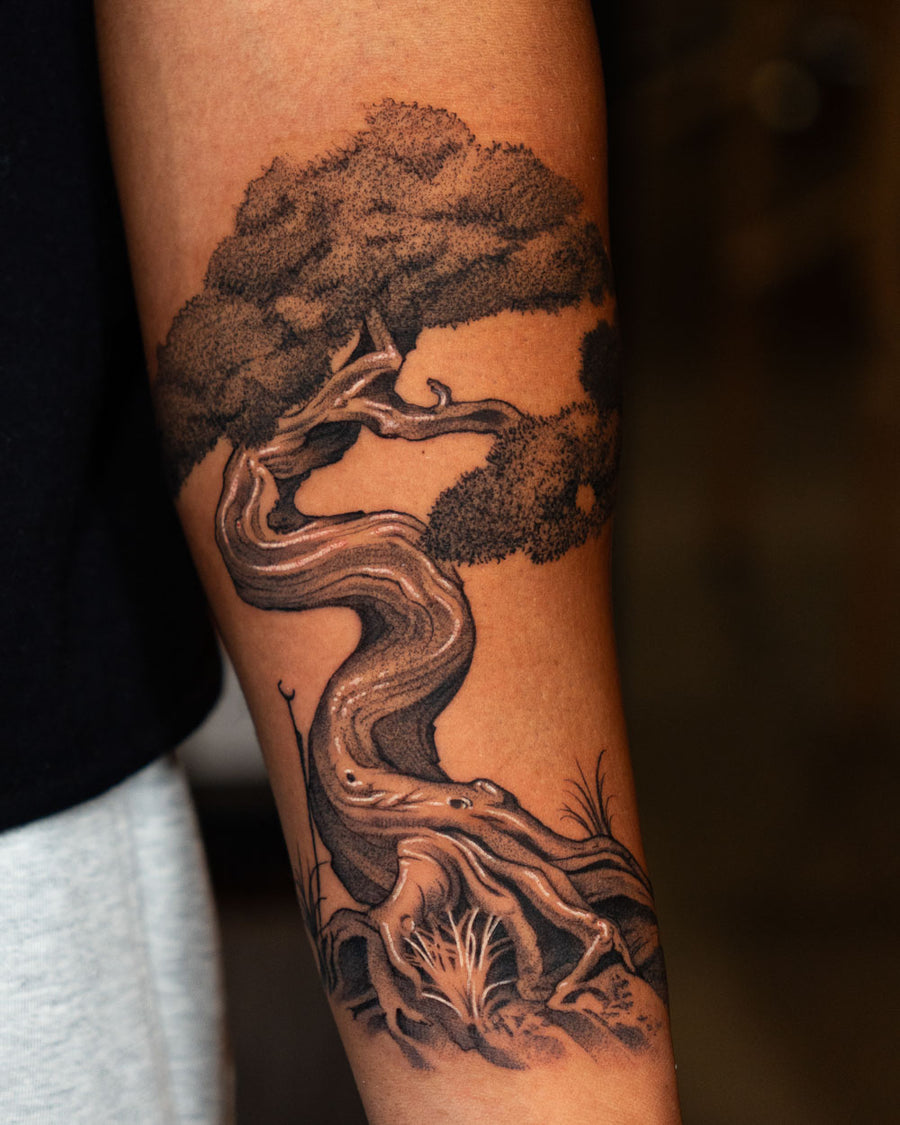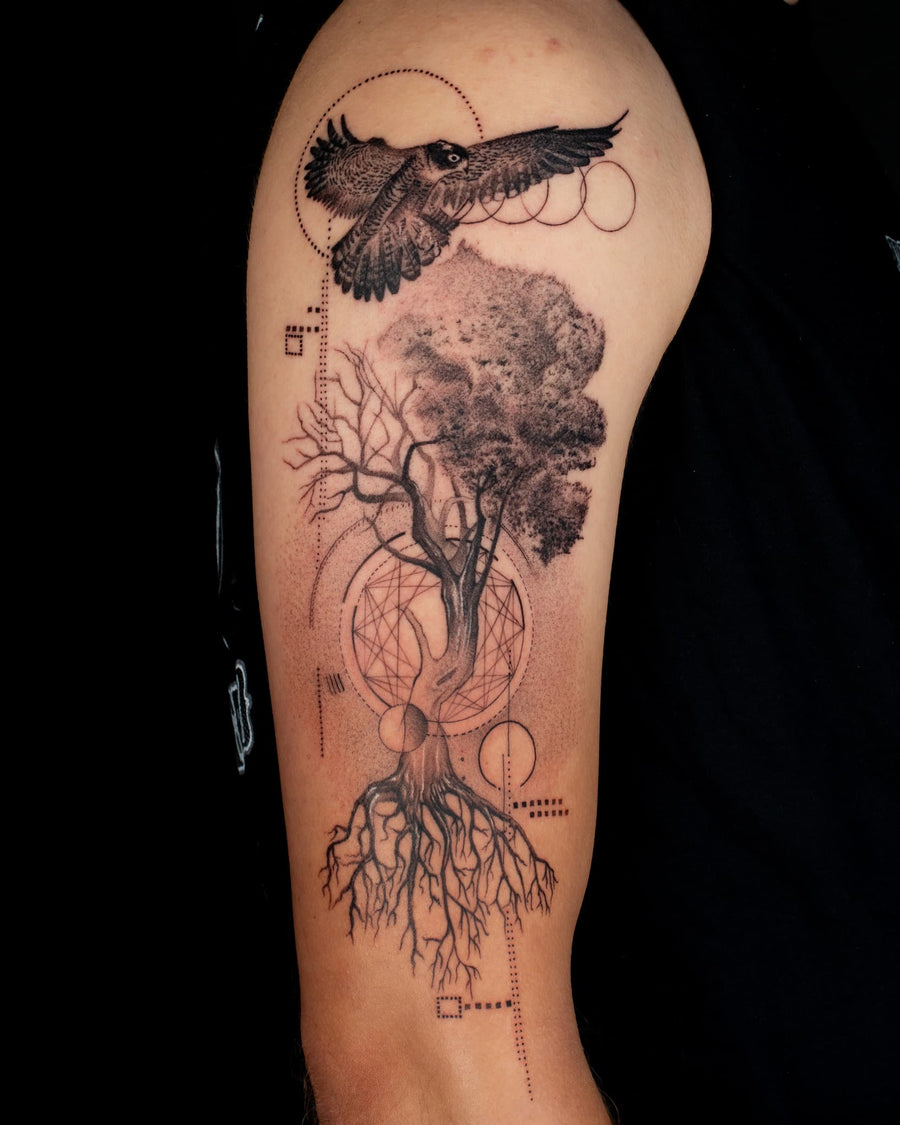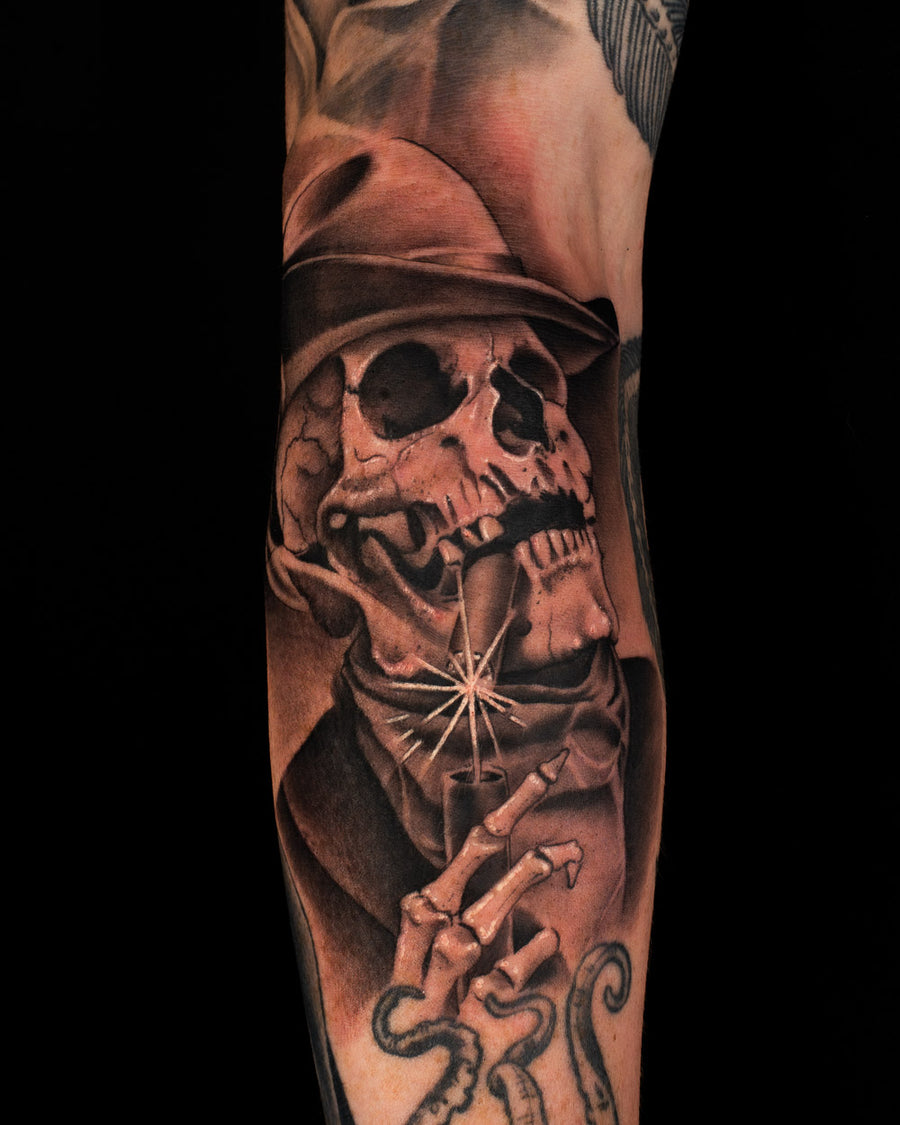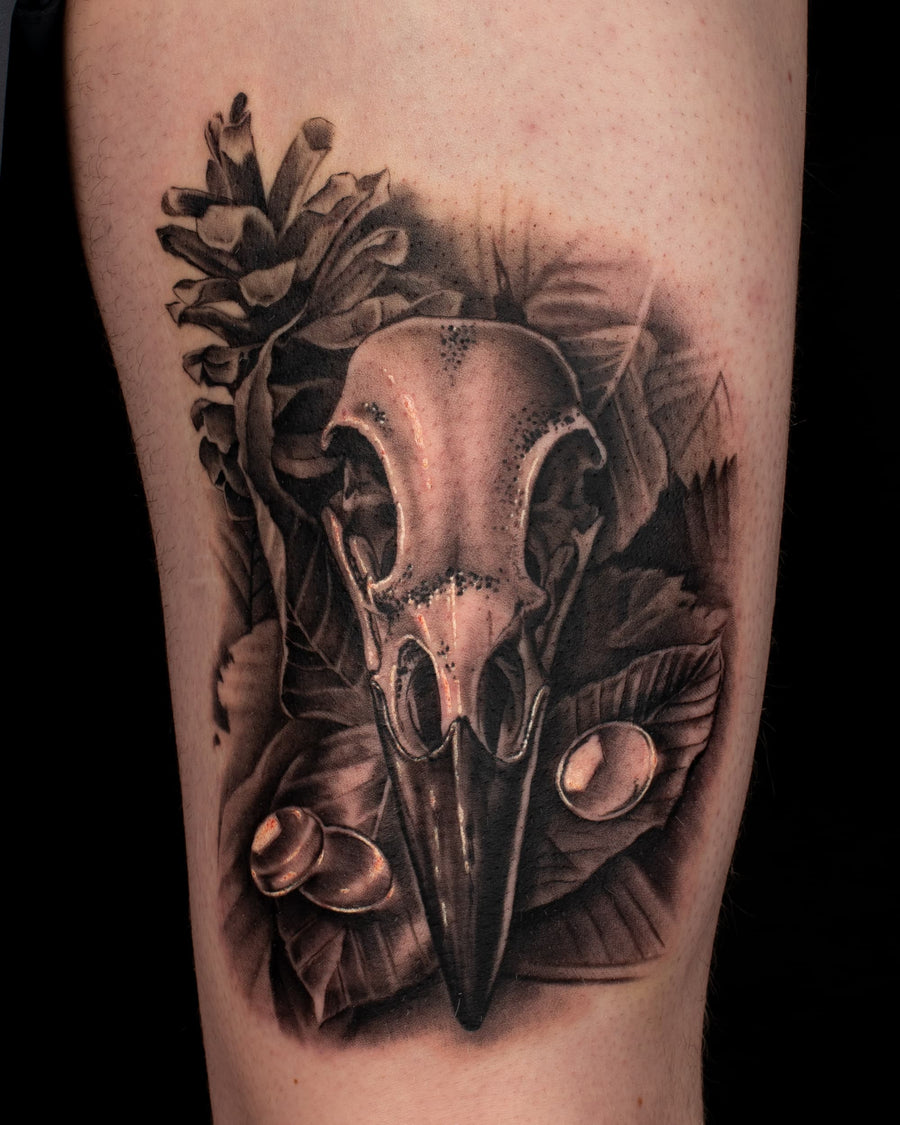
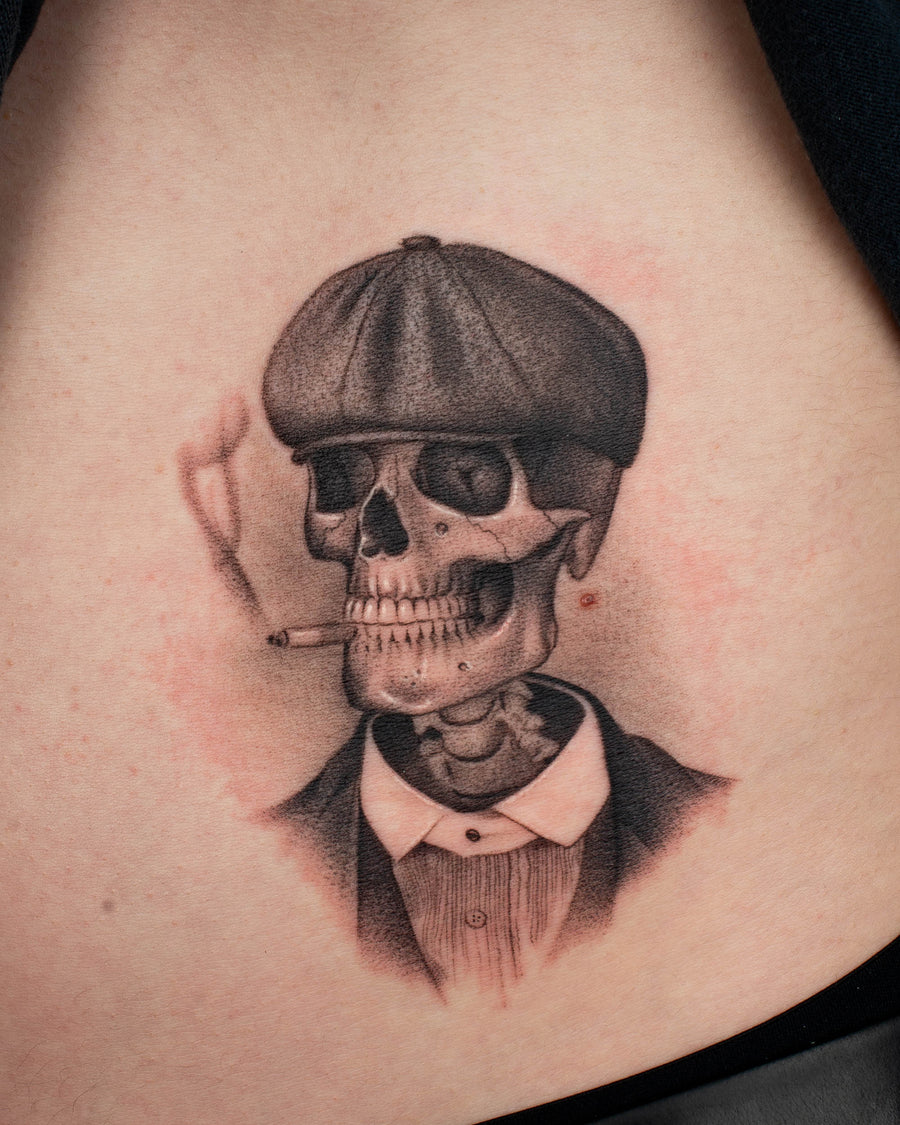
Decay tattoo reference 1
Decay tattoo reference 2
Decay tattoo reference 3

Beauty in Deterioration

Decay Tattoos

Symbols of deterioration, impermanence, and beauty found in decline.

TATTOO MEANING

What Decay Tattoos Represent

Decay tattoos find beauty where others see only endings. They acknowledge that deterioration is part of existence, that autumn leaves are as beautiful as spring blossoms, that there is something honest about showing wear. These designs reject the cult of perfection, finding meaning in wilting flowers, weathered skulls, and crumbling structures. This guide explores how decay imagery transforms mortality awareness into aesthetic appreciation, celebrating what falls apart rather than denying it.
Decay
HISTORY & SYMBOLISM

The Origin of Decay Tattoos

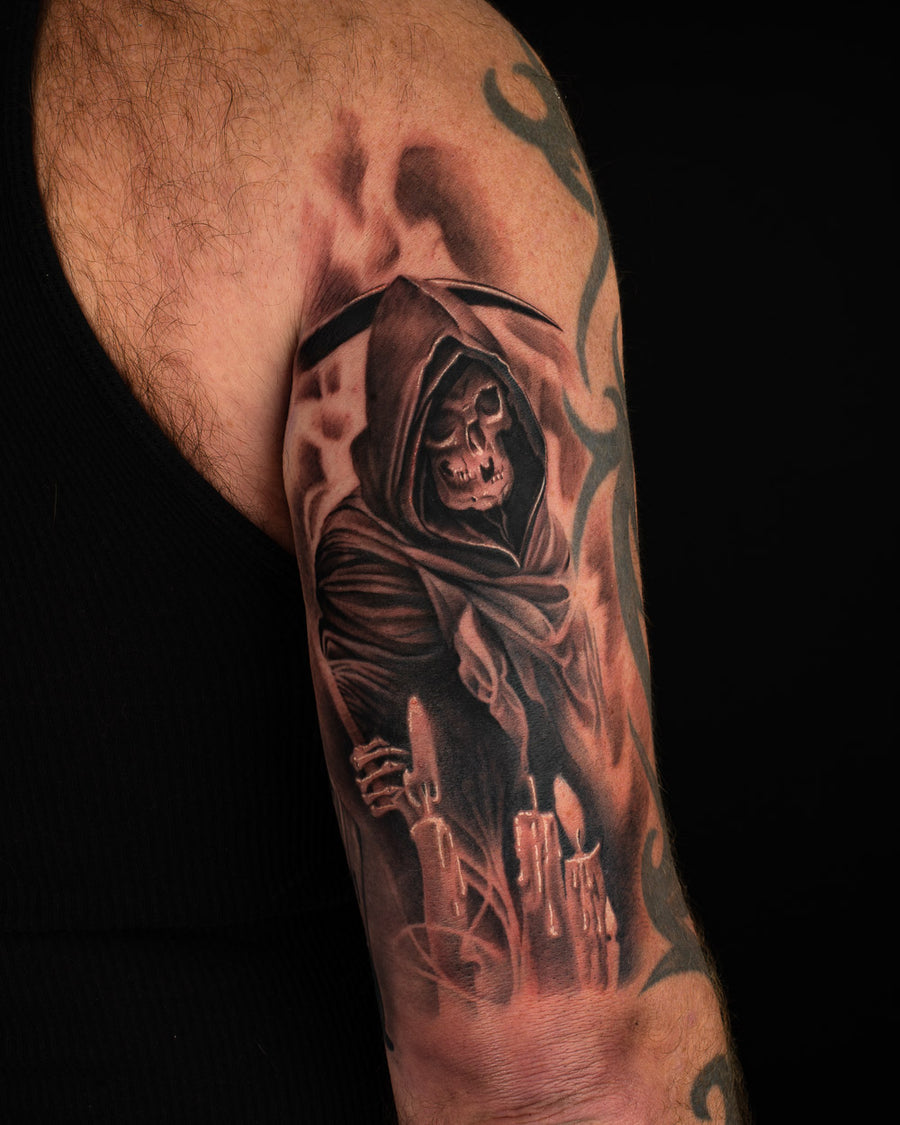
Decay imagery in art has deep roots in the vanitas tradition, a genre of still-life painting that emerged in the Netherlands during the 16th and 17th centuries. Vanitas works featured rotting fruit, wilting flowers, extinguished candles, and skulls alongside symbols of wealth and achievement, reminding viewers that all earthly things decay. The message was moral and spiritual: beauty fades, power ends, flesh returns to earth. This tradition drew from medieval Danse Macabre imagery, which depicted skeletons dancing with the living to emphasize death's democracy.

In tattooing, decay imagery evolved from religious warning into aesthetic statement. Gothic subculture, emerging in the late 1970s, embraced decay as beautiful rather than merely cautionary. Dead trees became symbols of resilience, standing despite deterioration. Wilting flowers represented beauty at every stage, not just peak bloom. Weathered skulls showed time's passage without fear. Today, decay tattoos often balance death imagery with life elements, showing flowers growing from skulls or new growth emerging from fallen trees. They represent acceptance of impermanence while finding beauty in the process rather than just the ending.
Decay
MODERN SIGNIFICANCE

What Decay Tattoos Mean Today

People choose decay tattoos to represent acceptance of impermanence, to find beauty in deterioration, or to mark personal experiences with endings and loss. These designs resonate with those who reject artificial perfection, who appreciate autumn as much as spring, and who find meaning in what falls apart rather than just what blooms. Decay tattoos acknowledge mortality while celebrating the aesthetic of decline.

Aesthetically, decay tattoos offer dramatic visual impact through contrasting elements. Wilting flowers capture beauty at every stage of life. Weathered skulls show time's passage. Dead trees represent resilience despite deterioration. Crumbling architecture evokes civilizations that passed. The most effective decay tattoos balance darkness with light, often incorporating living elements alongside dying ones to suggest cycles rather than simple endings.
Decay
Decay Tattoo FAQ

Common Questions About Decay Tattoos

What do decay tattoos symbolize?

Decay tattoos symbolize impermanence, the beauty found in deterioration, and acceptance of life's natural cycles. Rather than purely morbid, they often represent finding meaning in endings, appreciating every stage of existence, and acknowledging that decay fuels renewal in natural systems.

What are popular decay tattoo designs?

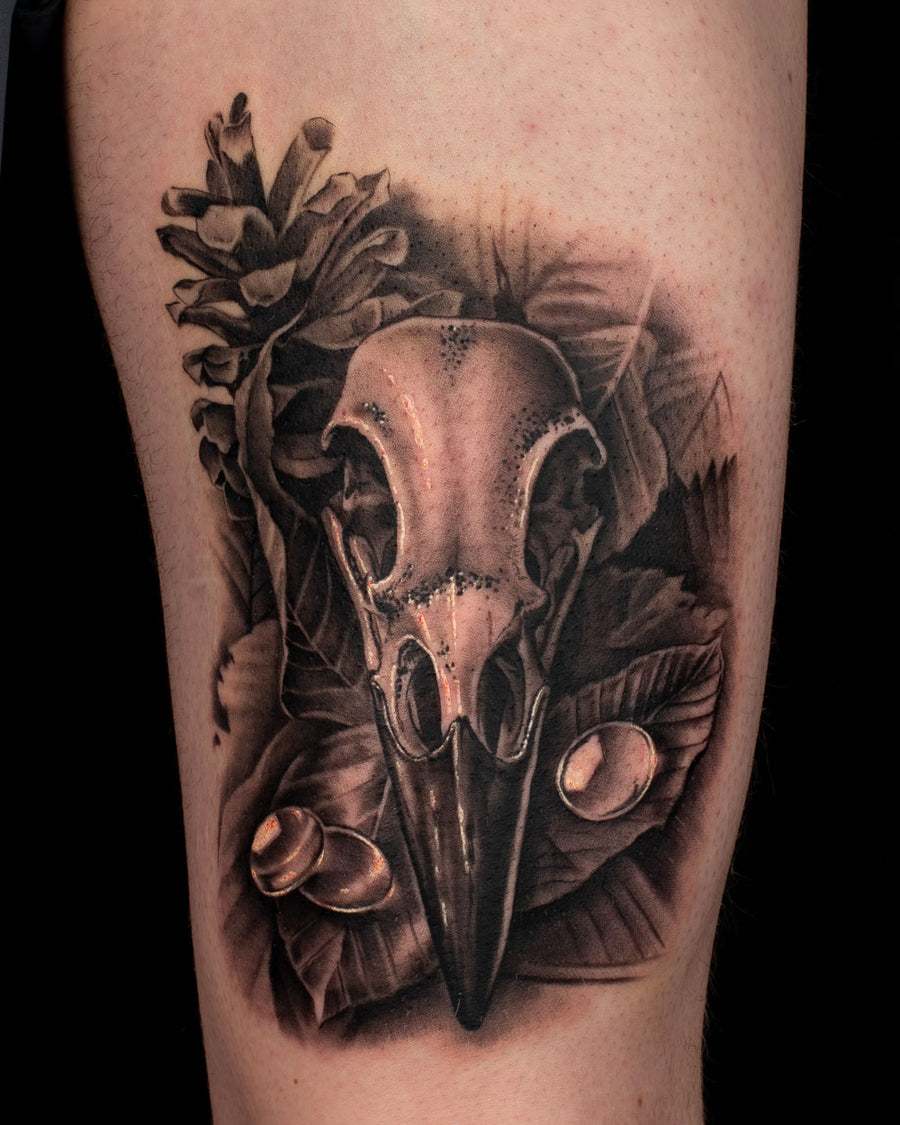
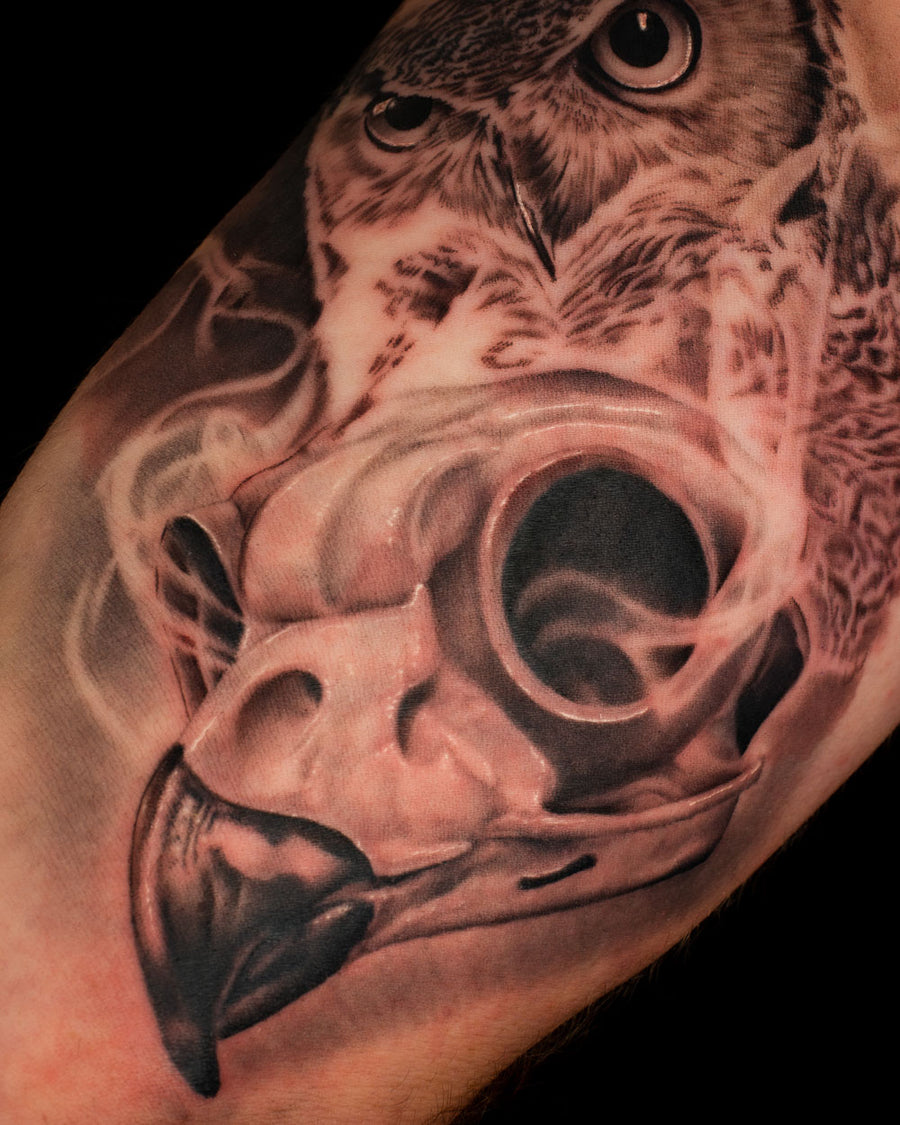
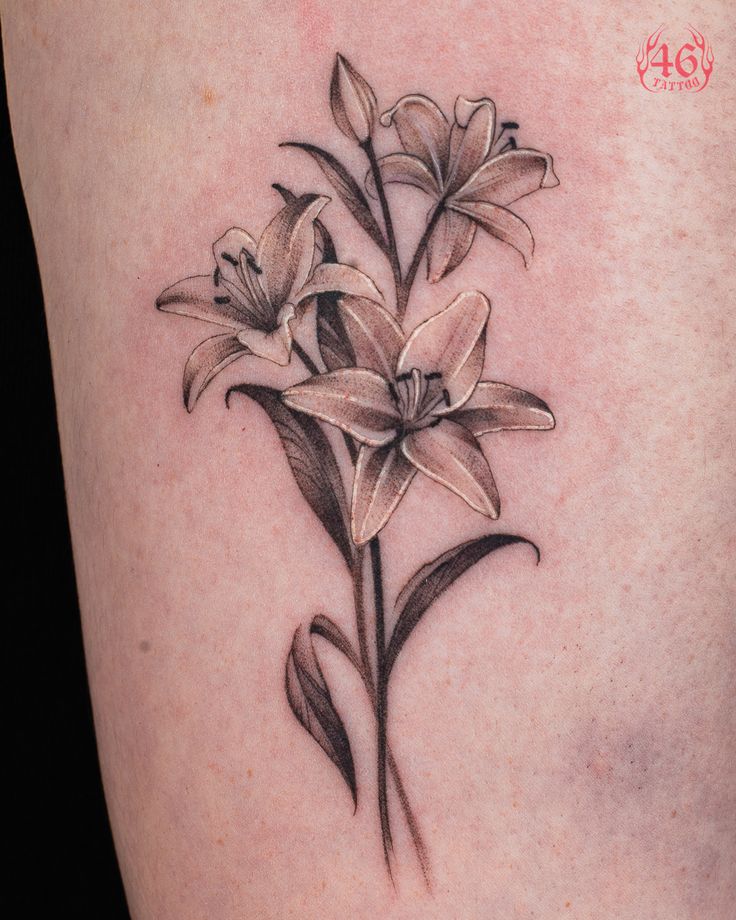
Common decay designs include wilting or dying flowers, weathered and aged skulls, dead trees with bare branches, crumbling architecture, decomposing elements paired with living ones, and time-worn objects. Many designs balance decay with growth imagery, like flowers emerging from skulls.

Can decay tattoos feel hopeful rather than dark?

Yes. While decay involves endings, many decay tattoos emphasize cycles rather than finality. Designs showing new growth emerging from decay, light breaking through deterioration, or beauty in every stage of life carry hope alongside acknowledgment of impermanence.

What is vanitas imagery?

Vanitas was a genre of still-life painting from 16th-17th century Netherlands featuring rotting fruit, wilting flowers, extinguished candles, and skulls alongside wealth symbols. The message emphasized that all earthly things decay. Decay tattoos often draw from this tradition.

What style works best for decay tattoos?

Black and grey realism captures detailed deterioration beautifully. Illustrative styles allow more stylized approaches. Gothic blackwork emphasizes dark mood. The best style depends on whether you want realistic depiction, stylized interpretation, or moody atmosphere.

or

Ready for a Decay Tattoo?

Keep scrolling—we'll guide you through styles, placements, and meanings below
Scroll Down

Your Journey to the Perfect Decay Tattoo

We'll guide you through every step of creating meaningful ink that lasts a lifetime

1

Choose Style

Find your aesthetic

2

Pick Placement

Choose location

3

Find Artist

Book consultation

Need help deciding? Talk to an expert for free

Step 1: Choose Your Style

Explore styles that work best for Decay tattoos, each chosen for flow, readability, and long-term wear.

Step 2: Choose Your Placement

Choose a placement that supports clarity, aging, and the meaning behind your Decay tattoo.

Step 3: Choose Your Artist

Choose an artist whose style, technique, and experience bring your Decay tattoo to life.

Start to Finish

Let’s Bring Your Idea to Life

Clean work, honest guidance, and a transparent process. At 46 Tattoo, your skin, your idea, and your trust are treated with real respect.

Book Your Free Consultation

Share Your Idea

Just send us your tattoo idea — even if it’s rough! From there, we’ll follow up to book your free consultation or you can choose a time directly through our calendar.

Not sure what you want? That’s okay too. We’re here to help guide you toward something that fits your vision and looks great long-term.

Free Consultation

Book a free 15-minute consultation— online or in person (we recommend stopping by to say hi!). We’ll go over your idea, size, placement, and pricing — no pressure to commit. Our goal is to understand your vision, answer your questions, and guide you toward a design that looks great now and for years to come.

We’re here to make the process smooth and stress-free.

Lock In Your Appointment

What Happens: Once you're ready to book in, we’ll take a deposit and lock in your session. From there, your artist will collaborate with you to finalize the design—incorporating feedback and making sure it aligns with your vision.

Time: Whenever you’re ready to book—no pressure

Cost: $100 deposit (applied to your final price)

Custom Design Creation

What happens: Your artist creates a design tailored to your anatomy, style, and vision. We’ll work closely with you—sharing drafts, gathering feedback, and making thoughtful adjustments—until the design feels just right.

Time: ~1-2 weeks

Cost: Included in your tattoo price

Leading Up to Your Appointment

A little prep can make a big difference. Here are a few simple tips to help you get ready:

  • Eat well and stay hydrated
  • Moisturize the area for a few days
  • Avoid sunburn, alcohol, and blood thinners
  • Review your appointment details — and reach out with any questions

Want more help? Check out our guides.

Time: Start prepping 2–3 days before your session

The Day of Your Appointment

Show up feeling good — we’ll take it from there.

  • Bring valid ID (you must be 18+)
  • Arrive on time — or a little early
  • Come well-fed, rested, and freshly showered
  • Bring water, snacks, and a friend if you like
  • Your artist will walk you through every step — from setup to aftercare

Time: Arrive on time

After Your Appointment

You’ll leave with a beautiful tattoo — and everything you need to take care of it properly.

  • Keep the area clean and moisturized
  • Avoid sun, soaking, and scratching
  • Healing takes 2–4 weeks, depending on your skin and placement
  • Got questions later? Just reach out — we’re always here to help

Time: 2–4 weeks

Cost: Aftercare is included — touch-ups are free within 6 months (if needed)