- by 46 Tattoo
What Happens Behind the Scenes of a Large Tattoo Project
- by 46 Tattoo
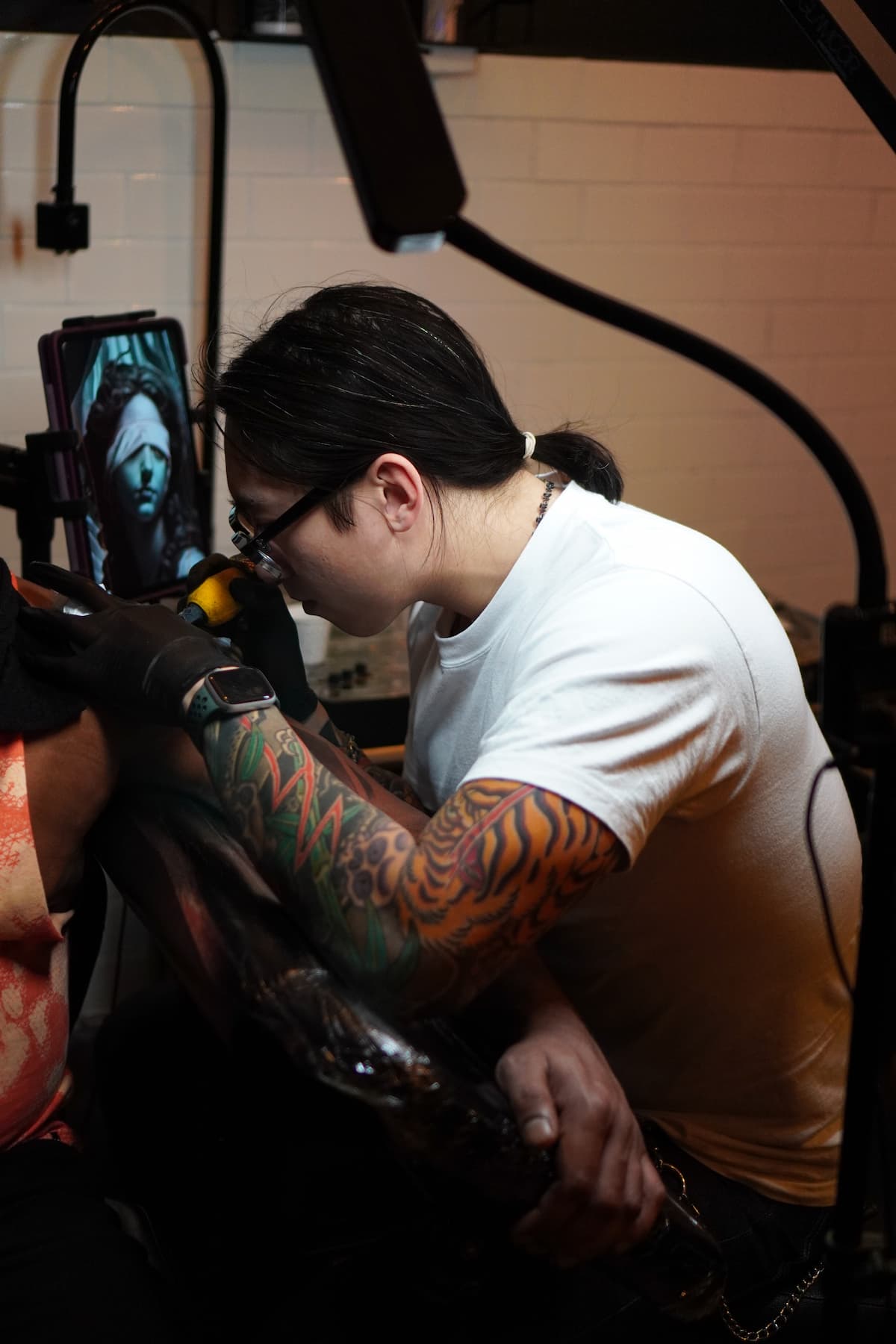
Sleeves and back pieces require extensive preparation you never see. Here's what happens between consultation and session.

You see the consultation. You see the finished design. You see the tattooing. But between these visible moments, substantial work happens that most clients never witness. Understanding this hidden process explains why quality large work takes time and why design costs are embedded in session rates.
The hours you pay for in a tattooing session represent only part of the labor invested in your piece:
Good artists study before drawing:
This research phase prevents mistakes that would otherwise appear in final designs. The artist who skips research produces work with obvious errors that knowledgeable viewers recognize immediately.
First attempts rarely survive. The iterative reality:
Artists often produce multiple versions you never see before landing on what they show you. This iterative process is normal and necessary. Your artist isn't just drawing your tattoo; they're thinking through every possibility to find the best one.
The design you approve needs translation into executable stencil:
Technical problems caught at this stage save painful corrections during tattooing. These decisions affect both the tattooing process and the long-term appearance of the work.