- by 46 Tattoo
Turning Personal History Into a Cohesive Sleeve
- by 46 Tattoo
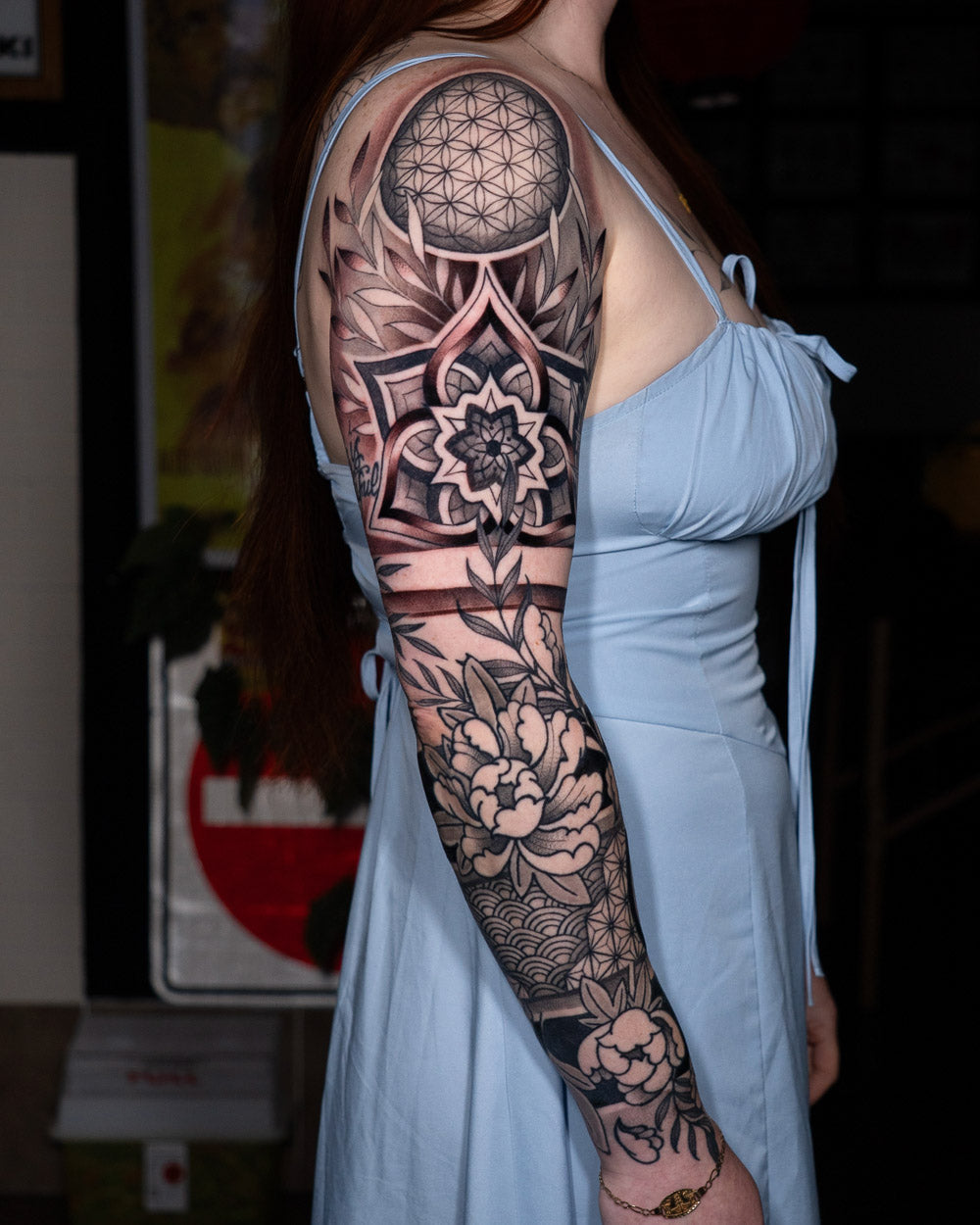
Autobiographical sleeves combine meaningful elements into unified design. Here's how to translate your story into cohesive ink.

Almost every meaningful element in your life could become a tattoo. Family members, formative places, career achievements, passions, beliefs, losses. The challenge isn't finding content but curating it. A sleeve that includes everything important becomes cluttered. The skill is selecting elements that represent your story while functioning as coherent visual composition.
Traditional Japanese and American Traditional approaches solved this through established conventions. Rules about what pairs with what, how elements flow, where negative space lives. Personal narrative sleeves lack these conventions but need equivalent organizing principles.
Not every meaningful element deserves equal visual weight. Consider what defines your story at the deepest level:
Your children might be central; your hometown is context. Your overcoming addiction might be defining; your college degree is supporting detail. Curation requires saying no to things that matter.
Disparate personal elements need unifying visual language to feel like one piece rather than a collection. This might come from:
A dragon for heritage, a compass for career, a rose for loss, all rendered in the same American Traditional approach, feel unified despite unrelated symbolism.
Some personal sleeves follow chronological narrative: birth imagery at the shoulder, formative experiences down the upper arm, present identity at the wrist. Others organize thematically: family on the inner arm, career on the outer, spirituality flowing between. The organizing principle matters less than having one.
Physical flow also matters: