- by 46 Tattoo
Tattoos on Aging Skin: What to Know
- by 46 Tattoo
Getting tattooed in your 50s, 60s, or beyond works well with informed decisions. Here's what to know about ink on mature skin.

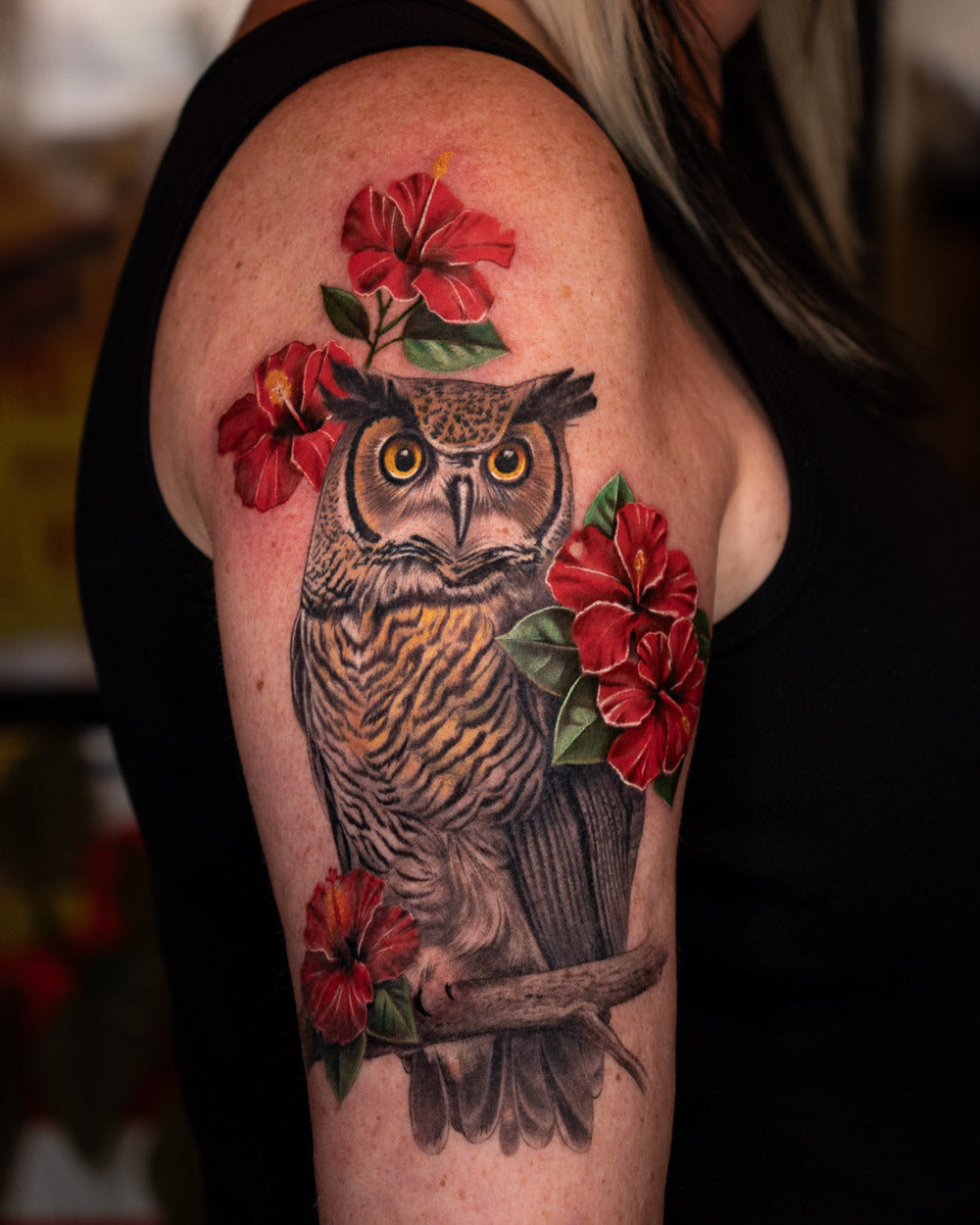
The tattoo industry's typical clientele skews young, but the medium itself carries no age limit. People in their 50s, 60s, and beyond get tattooed regularly with excellent results. The considerations differ somewhat from younger skin, but the differences are manageable rather than prohibitive.
Mature skin often brings advantages:
Aging skin loses elasticity and collagen. It's typically thinner and may bruise more easily. These factors don't prevent tattooing but may affect:
Sun-damaged skin presents specific challenges. Years of UV exposure change the skin's structure and color. Heavily sun-damaged areas may not hold pigment as cleanly or may require adjusted technique.
Scale protects against the softening that occurs over decades. Detailed work in small scale on mature skin may blur faster than the same design on younger skin. Generous sizing with appropriate detail level for your skin's current condition produces better long-term results.
Bold styles with strong contrast often suit mature skin well:
Medications become relevant. Blood thinners affect bleeding and may require medical consultation before tattooing. Some medications affect healing. Inform your artist of everything you take; they'll advise on any necessary precautions.
Healing may require slightly more patience. Where a thirty-year-old heals completely in three weeks, a sixty-year-old might need four. This isn't a problem, just a timeline adjustment.