- by 46 Tattoo
Illustrative Sleeve Tattoos: A Complete Guide
- by 46 Tattoo
Illustrative tattooing grew out of indie comics and print culture. It's one of the most expressive sleeve styles available, and one of the most artist-dependent.

Illustrative tattooing grew out of the alternative comics explosion of the 1980s and 90s. Artists like Robert Crumb, Dave McKean, and the wave of independent publishers that followed them created a visual language that felt expressive, personal, and deliberately hand-made. Tattoo artists noticed. By the mid-2000s, a generation trained on indie comics and concept illustration was bringing that aesthetic to skin.
The style accelerated alongside social media. Instagram gave illustrative artists a global audience for the first time. Portfolios that would have lived in a single city's shop suddenly reached collectors worldwide. The demand that followed pushed the work further, and by the 2010s illustrative tattooing had split into distinct substyles: storybook linework, dark painterly fantasy, editorial black and grey, natural history illustration. Each one traceable back to a particular corner of print culture.
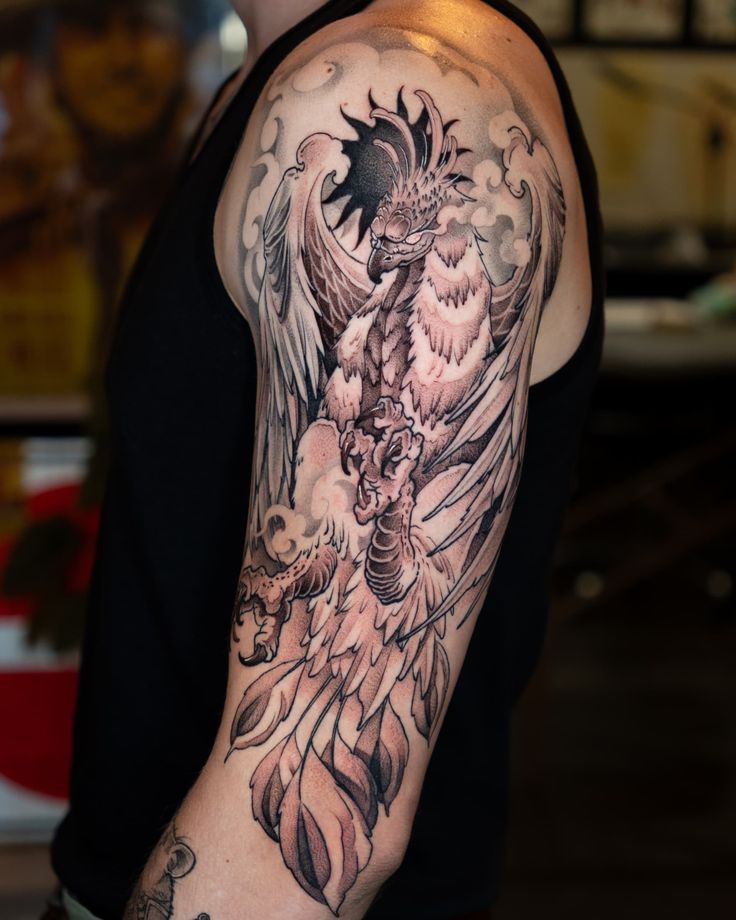
Illustrative tattooing sits between traditional and realism. It uses clean linework as its foundation, but incorporates shading and texture that add depth. Think of a hand-inked comic panel brought to life at scale. The lines have weight and intention. The shading is interpretive, not photographic.
The style is defined less by rules and more by the artist's sensibility. That flexibility is a feature. Your sleeve can feel dark and cinematic, or light and storybook, or something entirely personal, depending on what direction you and your artist build together. It's also a genuine specialty. Not every artist does it well. Look specifically for portfolios with strong illustrative work before booking.
Illustrative sleeves work best when there's a clear visual theme before the first session. A direction, whether it's folklore, gothic architecture, natural history, or mythology, gives the artist a framework. The sleeve can then be built as one connected piece rather than assembled from unrelated elements.
You don't need every detail figured out upfront. You need a direction. From there, the artist maps the full arm before any ink is set, thinking through how elements at the shoulder connect to those at the wrist.
Common directions for illustrative sleeves:
A full illustrative sleeve typically takes several months to two years, depending on density, detail level, and how often you book. Sessions run 6 to 10 hours based on your comfort. Cost is by the hour. Design work is included.
What adds time:
For a specific estimate, reach out. A short conversation about your direction will tell you more than any range we could print here.