- by 46 Tattoo
How to Plan a Sleeve Around a Busy Schedule
- by 46 Tattoo
Busy professionals complete sleeves without rearranging their lives. Strategic scheduling makes major work surprisingly manageable.

Counterintuitively, busy people often complete tattoos faster than those with abundant free time. Constraints force efficiency. When you only have one Saturday a month, you prepare properly for it. When sessions are precious, you don't cancel casually. The executive who blocks a quarterly full-day often finishes their sleeve before the freelancer who keeps meaning to schedule something.
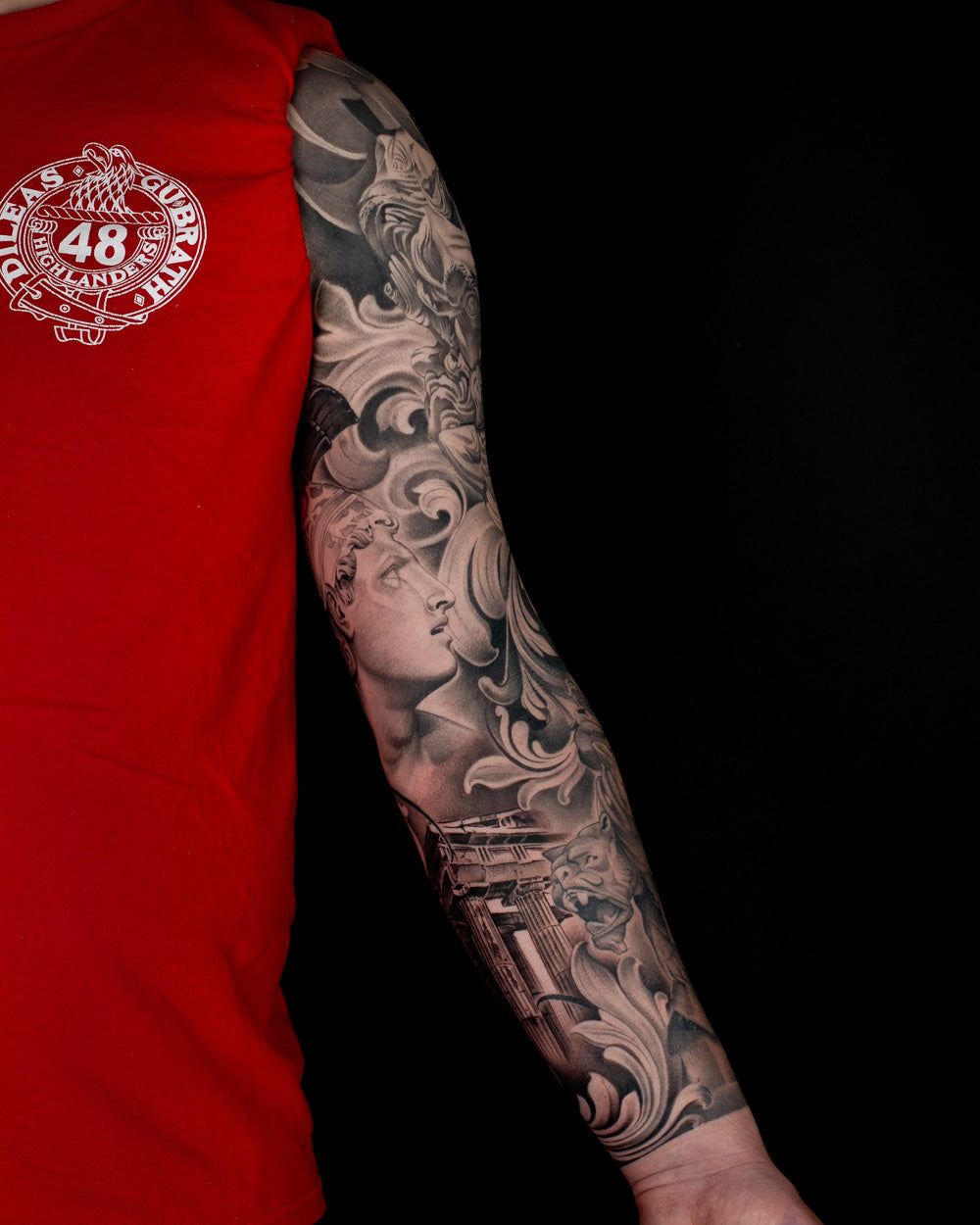
The math makes this concrete. A full sleeve requires roughly 30-50 hours of tattooing. One 8-hour Saturday monthly completes that in 4-7 sessions over 4-7 months. That's twelve days of actual commitment across an entire year. Put differently: the sleeve you've been putting off for five years would require less time than you spent commuting last month.
Timing matters. Look for natural opportunities:
The clients who finish efficiently treat tattoo sessions like any other calendar commitment. They book the next session before leaving the current one. They don't cancel for reasons they wouldn't cancel a client meeting.
When time is scarce, efficiency within sessions becomes critical. Longer sessions accomplish more work per hour of life disruption. A committed 7-hour Saturday covers what might take three separate 3-hour visits when accounting for stenciling, positioning, and the warm-up phase of each session.
Preparation determines sitting capacity:
Clients who prepare thoughtfully routinely sit 30-40% longer than those who arrive unprepared.
Healing happens regardless of your schedule. Fresh tattoos are mildly uncomfortable for a few days, then forget about themselves. Desk work is almost always fine the next day. Physical labor may need a day or two of accommodation. The recovery burden is far lighter than most people imagine.
Wardrobe is the main consideration. Fresh arm tattoos want loose sleeves for a week or so. Planning sessions around dress codes or presentations makes sense. But absent specific events, most professionals find tattoo healing integrates into work life without significant disruption.