- by 46 Tattoo
How Skin Tone Affects Tattoo Design Choices
- by 46 Tattoo
Skin tone influences which colors work and what techniques apply. Here's how to design for your specific complexion.

Every tattoo is seen through skin. The ink doesn't sit on top; it lives within the dermis, viewed through the epidermis above. Your skin's melanin level affects how colors appear, how contrast reads, and which techniques work best. Understanding this isn't about limitation but optimization.
The core challenge is contrast. As melanin increases, the lighter end of the value scale becomes less accessible. What appears as bright yellow on light skin may barely register on dark skin. This isn't a flaw in the ink or the artist; it's physics. Working with this reality rather than against it produces better results.
Higher melanin content affects how colors read:
Color tattoos absolutely work on melanated skin when artists understand color theory. The key is strategic color selection, not avoiding color entirely. That outdated advice limited options unnecessarily.
Experienced artists adapt approach for darker skin tones:
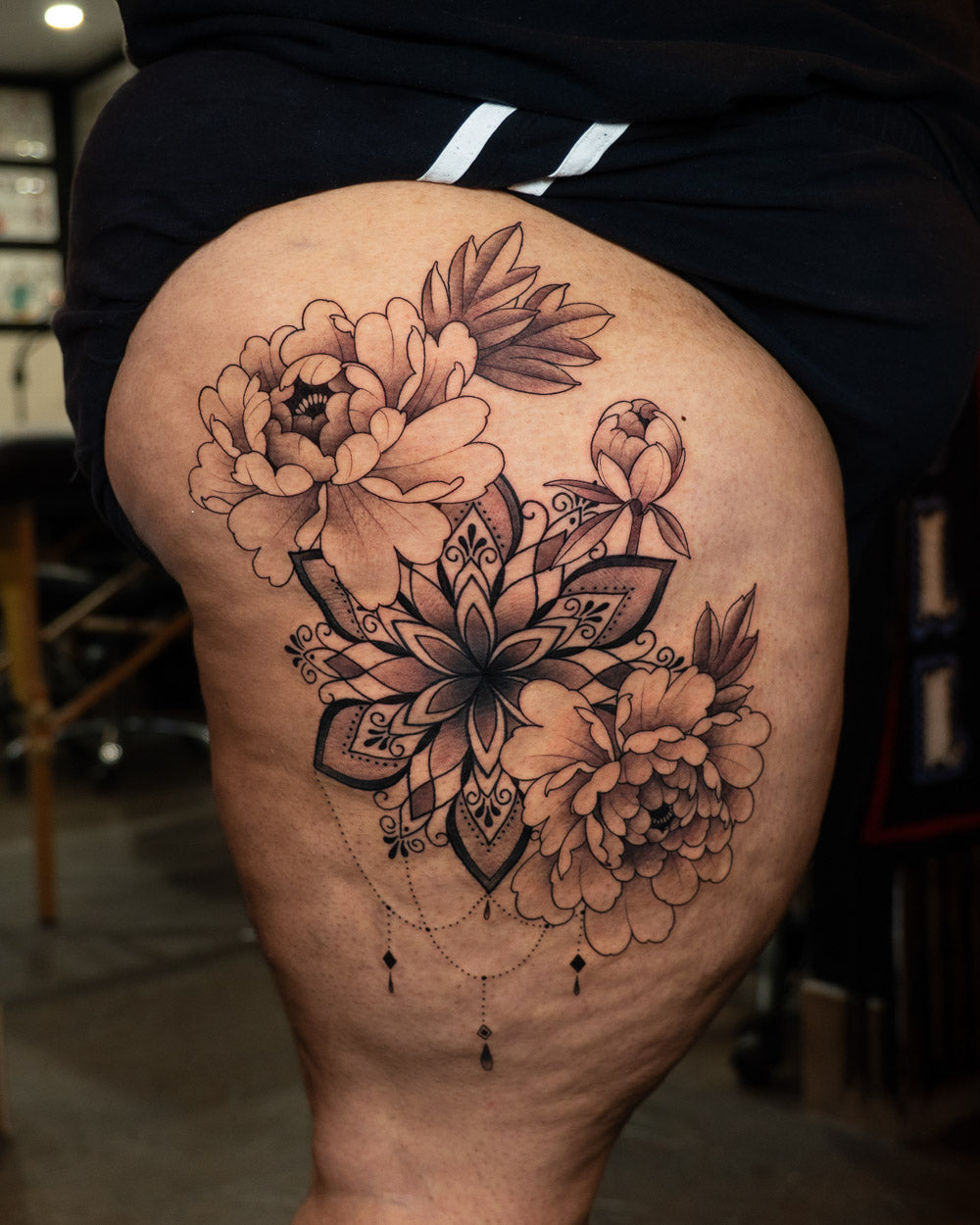
Black and grey work succeeds beautifully across all skin tones when executed with proper contrast. Strong blacks alongside deliberate negative space creates the value range needed for dimension.
Look for healed work on skin tones similar to yours. Fresh tattoos photograph more vibrantly than healed ones; seeing settled work on comparable complexions reveals what you can actually expect.