- by 46 Tattoo
How Muscle Growth Changes Tattoo Appearance
- by 46 Tattoo
Building muscle affects existing tattoos. Here's what actually happens and how to plan around fitness goals.

Muscle and fat change skin differently. Fat deposits unevenly and can create bulging distortion. Muscle generally expands more uniformly beneath the skin, stretching tattoos proportionally rather than distorting them.
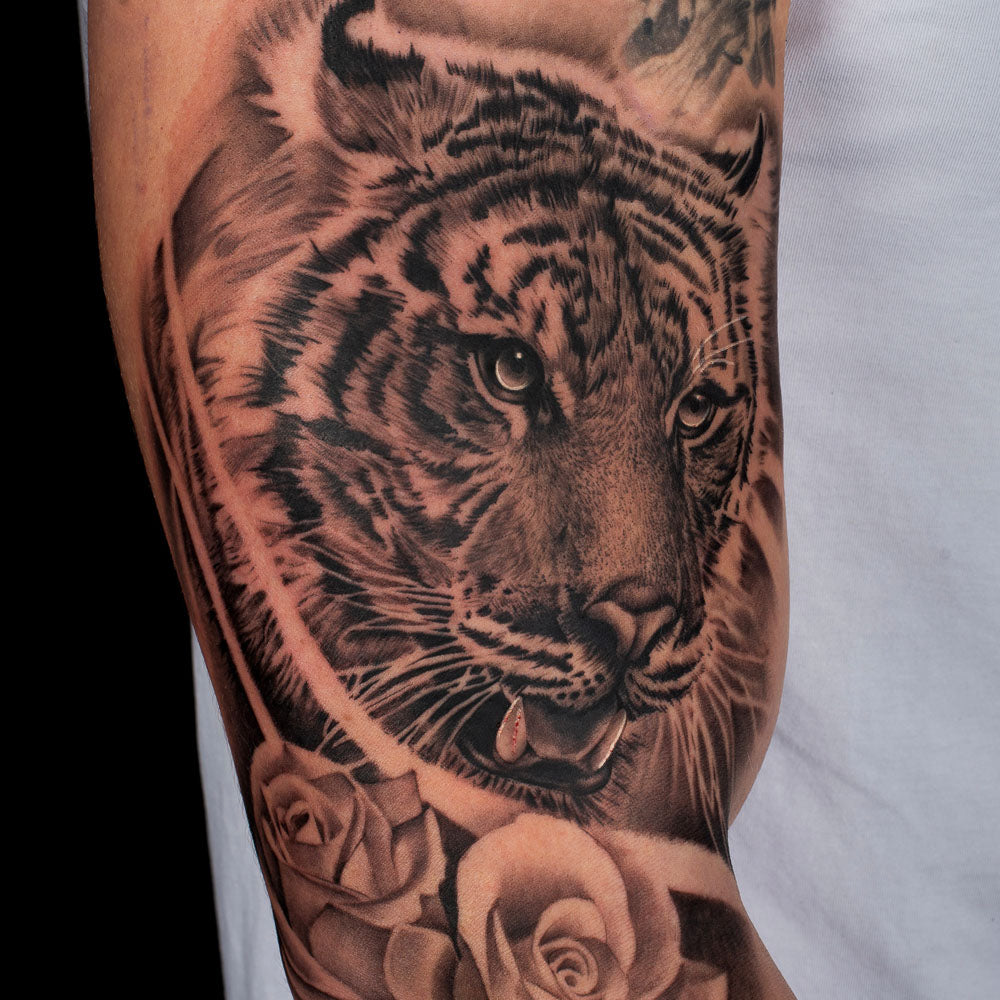
The mechanics matter. When a bicep grows from training, the tattoo on it stretches fairly evenly across the expanding surface. The proportions shift slightly larger, but the image itself maintains its relationship to the underlying structure. This is different from fat deposits, which can push unevenly and create lumpy distortion.
Some muscle groups respond more dramatically to training:
Lower-change areas for most people:
If you're early in a transformation, consider waiting. The chest you have now may look quite different in two years. Getting a detailed piece across your pectorals before significant development means the design will stretch as you grow. Some people prefer this natural evolution; others wish they'd waited.
If your physique is relatively stable, even if you train regularly, less concern is warranted. Most people reach a maintained plateau rather than continuously growing.
Certain designs accommodate growth better than others:
Scale provides protection. Larger work with appropriate spacing between elements absorbs gradual change. Tightly packed detail in small scale may blur as skin stretches.