- by 46 Tattoo
How Long a Full Back Piece Takes (Realistic Timeline)
- by 46 Tattoo
Full back pieces require 50-100+ hours across 1-3 years. Here's what determines your timeline and what to expect.

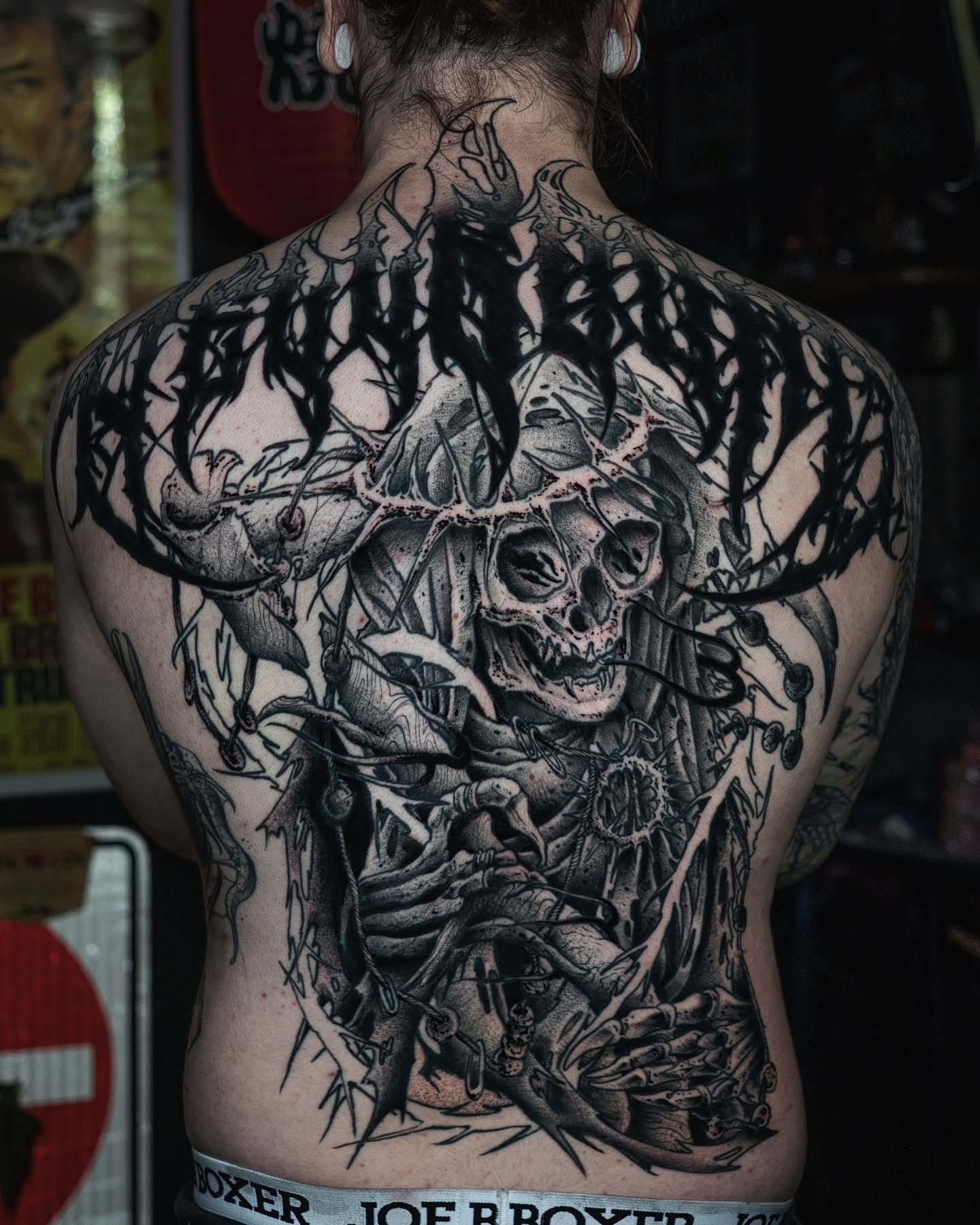
Your back is the largest uninterrupted canvas on the human body. From shoulders to waist, it offers 400-600 square inches of workable space. For comparison, a full sleeve covers perhaps 200 square inches. This scale is what makes back pieces among the most ambitious and time-intensive projects in tattooing.
Typical hour requirements by style:
Most artists work in 6-8 hour sessions for large back work, though some push to 10 hours for well-prepared clients. The work progresses in distinct phases:
Assuming 7-hour average sessions, an 80-hour back piece requires roughly 11-12 sessions. With monthly scheduling and healing time between adjacent areas, that's 12-18 months from start to finish.
Japanese traditional back pieces represent the upper end of time investment. The extensive background work, water elements, wind bars, and cloud formations that create flow between major motifs require substantial hours. A Japanese back piece might run 80-120 hours depending on complexity.
American Traditional, with its bold outlines and solid color fills, typically moves faster. Less fine detail means more ground covered per hour. Black and grey realism falls somewhere between, depending on the level of photorealistic detail.
The most common timeline killers:
The tattooing time is the same in all cases; only the calendar duration differs.