
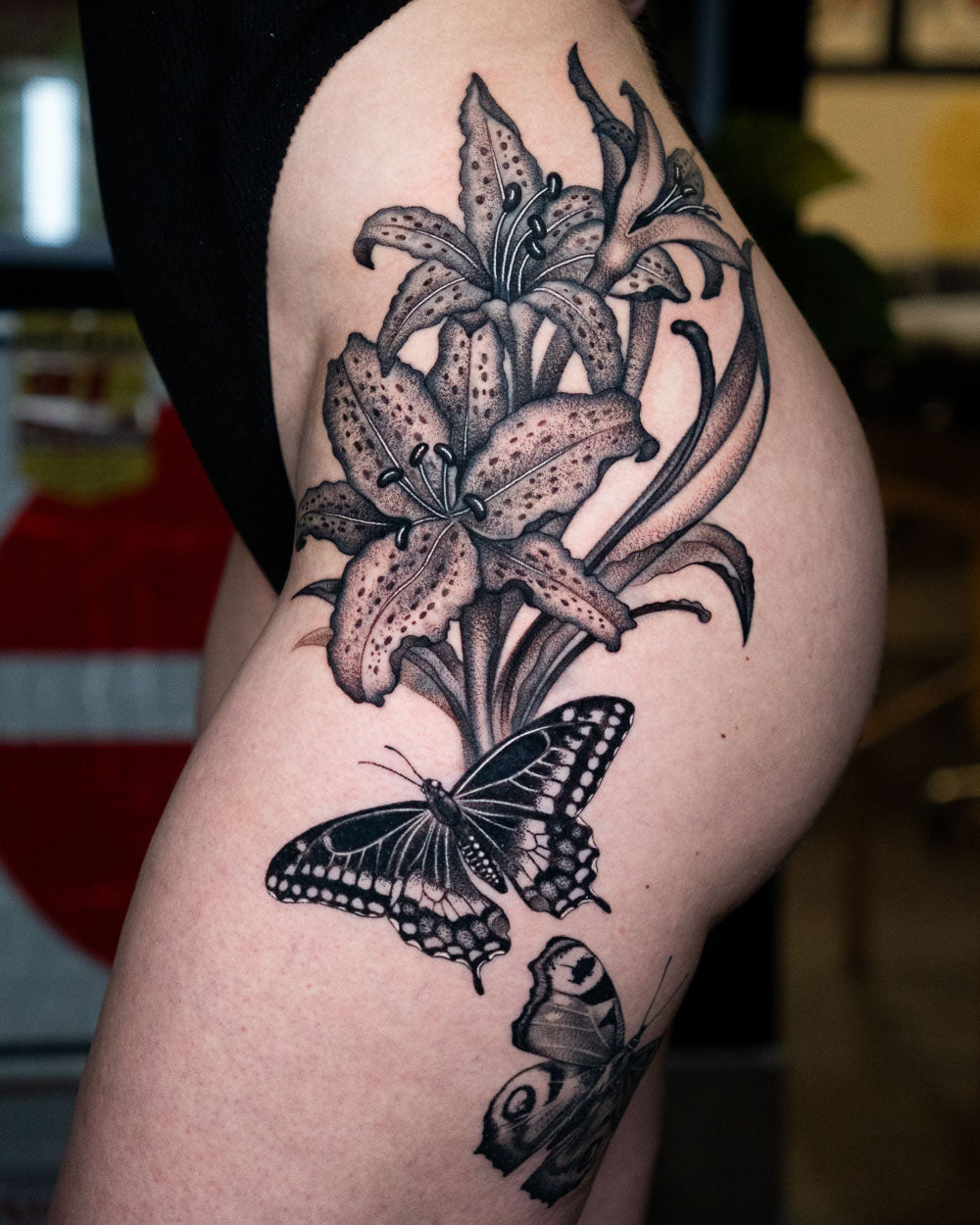
- by 46 Tattoo
Consecutive Tattoo Sessions: Who They're Best For
- by 46 Tattoo
Back-to-back tattoo sessions can dramatically accelerate large projects for the right candidates. Here's who benefits most.

Some collectors pursue back-to-back tattoo sessions to maximize progress, particularly when traveling to work with a specific artist or when scheduling windows are limited. The approach works by tattooing different body areas on sequential days, so you're never reworking healing skin. Monday covers the outer forearm. Tuesday moves to the inner arm. Wednesday addresses the shoulder cap.
This contrasts with traditional approaches. Horiyoshi III, the legendary Japanese master whose own bodysuit took 12-13 years to complete, typically sees clients for weekly sessions over years. Consecutive-day intensity is a modern accommodation for different circumstances, not the historical norm.
Consecutive sessions favor specific circumstances:
What unites successful multi-day clients is self-knowledge. They've done long sessions before. They understand how their body responds to extended tattooing. They can accurately predict whether day three will be manageable or miserable. First-timers rarely have this calibration.
Your body has limited recovery resources. After an extended session, adrenaline depletes. Inflammation accumulates. Sleep quality often suffers from fresh tattoo discomfort. Day two begins at a deficit that day three compounds further.
Managing this requires intentional recovery between sessions. Prioritize sleep. Eat protein-rich meals. Hydrate aggressively. Accept that day three will feel substantially different from day one. Good artists experienced with multi-day work understand this rhythm and adjust expectations accordingly.
Quality must never be sacrificed for schedule. If you're struggling significantly by day two, there's no shame in pausing. The work isn't going anywhere. An artist who pushes through when the client is clearly suffering is prioritizing completion over experience, and likely over quality as well.
The best multi-day sessions have built-in flexibility. Plan for three days with the understanding that stopping at two is perfectly acceptable. Medical recommendations typically suggest 3-4 weeks between heavily shaded sessions for optimal healing. Consecutive days are possible but demanding.