- by 46 Tattoo
Can You Build a Sleeve Over Time? (Budget-Friendly Approach)
- by 46 Tattoo
You don't need to fund a full sleeve upfront. Plenty of great sleeves were built one piece at a time — the trick is planning the whole thing before you start.

A sleeve doesn't have to be commissioned and completed in one go. Many of the best sleeves in any studio's portfolio were built over years, one piece at a time, by clients who were thoughtful about how each new addition connected to what was already there. The key isn't funding the whole project upfront. The key is planning the whole project upfront, even if you're only executing it in stages.
The most common mistake people make when building a sleeve over time is adding pieces without a plan. Each new tattoo looks good on its own, but after three or four additions the arm starts to feel like a collection rather than a composition. Fixing that later is difficult and expensive.
The better approach: before your first session, sit down with your artist and map the full sleeve conceptually. You don't need to book it all. You just need to know where everything is going. That roadmap lets each new piece be designed with the finished arm in mind, even when you're only tattooing a quarter of it today.
Not all styles are equally suited to piecemeal builds. American Traditional is the most forgiving. Its self-contained designs and consistent bold outlines mean individual pieces stay visually coherent even when tattooed years apart. The patchwork nature of many American Traditional sleeves is a feature, not a flaw.
Japanese traditional also builds well, because the style has established conventions for how motifs connect: water carries across sections, clouds fill negative space, and background elements were designed to link separate subjects. A Japanese sleeve built over two years by the same artist will look intentional because the visual language is built for it.
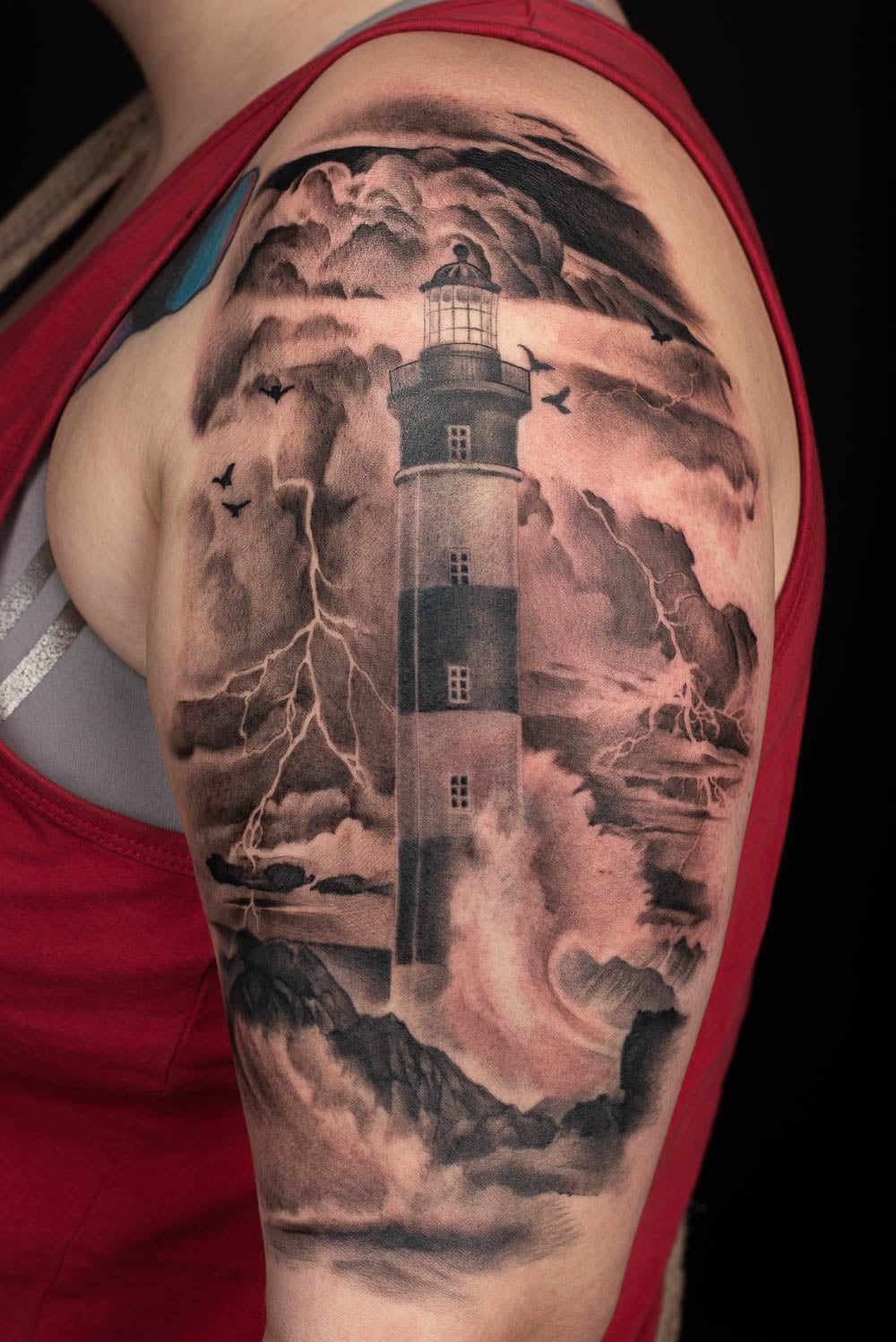
Fine line and realism are harder to build piecemeal, because subtle tonal shifts between sessions are more visible in those styles. Consistency matters more when the work is delicate.
A full sleeve built over time is the same total cost as a full sleeve booked in one go. You're paying by the hour either way. The financial advantage of building over time is cash flow: instead of funding the whole project at once, you're spending in increments as your budget allows.
A few things that help:
Come with a direction, not a finished concept. Your artist doesn't need a complete design spec. They need to understand the aesthetic you're drawn to, the subjects or themes that matter to you, and whether you have any existing work on the arm that needs to be incorporated.
From there, the artist maps the full arm conceptually, identifies where to start, and designs the first piece with the finished sleeve in mind. You leave with a plan and a date. Everything else follows at your pace.